
Maradona, God, and the Camera
By Mani Mehrvarz | July 2026
It’s July, and with the World Cup now underway, I’ve been thinking again about Diego Maradona.
Almost twelve years ago, during the 2014 World Cup, I was on a small boat in the Caspian Sea with a group of illegal fishermen. They were fishing for sturgeon, which was completely forbidden. While they worked, they were listening to the World Cup on a small shortwave radio.
I asked one of them which team he supported.
“Maradona.”
“But Maradona doesn’t play anymore. Who do you like now?”
He answered:
“God is one.”
I still think about that answer.
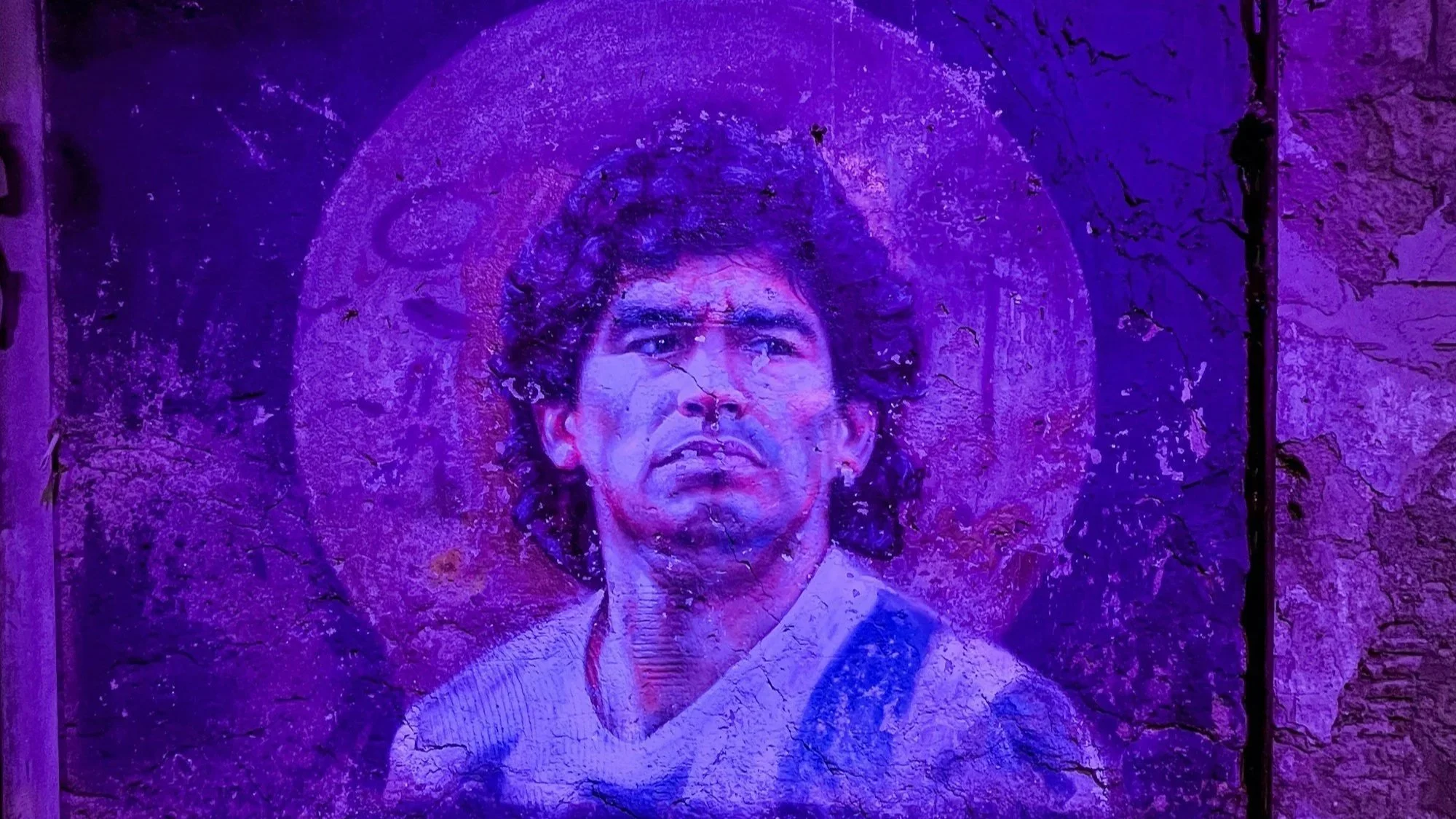
He didn’t name Argentina, Brazil, or Germany. For him, Maradona was no longer simply a football player who had retired. Somehow, he had moved into another category, closer to belief.
Maybe that is also why Maradona remains such an interesting documentary subject.
Asif Kapadia’s Diego Maradona focuses largely on Maradona’s years in Naples after he joined Napoli in 1984. Built from a huge archive of personal footage, the film often feels as if it is looking at two people at once: Diego, the person, and Maradona, the public figure created by fame, talent, pressure, and the expectations surrounding him.
Maradona by Kusturica takes a very different approach. Emir Kusturica does not try to hide his admiration for Maradona. He places himself inside the film and follows Maradona through Argentina, Naples, and Cuba. Politics, addiction, family, football, and the almost religious devotion surrounding him all become part of the portrait.
Watching these films makes me think again about that fisherman.
Once enough people place their hopes, anger, politics, disappointments, and dreams onto one person, what exactly is the documentary camera filming? The person himself, or everything that other people have made him represent?
I don’t think documentary always needs to resolve that contradiction. Sometimes staying close to it is more interesting than reaching a judgment.
Sometimes the camera points toward someone who can be both god and evil.
That uncomfortable space is where many of our stories begin.
