
All the Beauty and the Bloodshed: Art, Addiction, and Activism
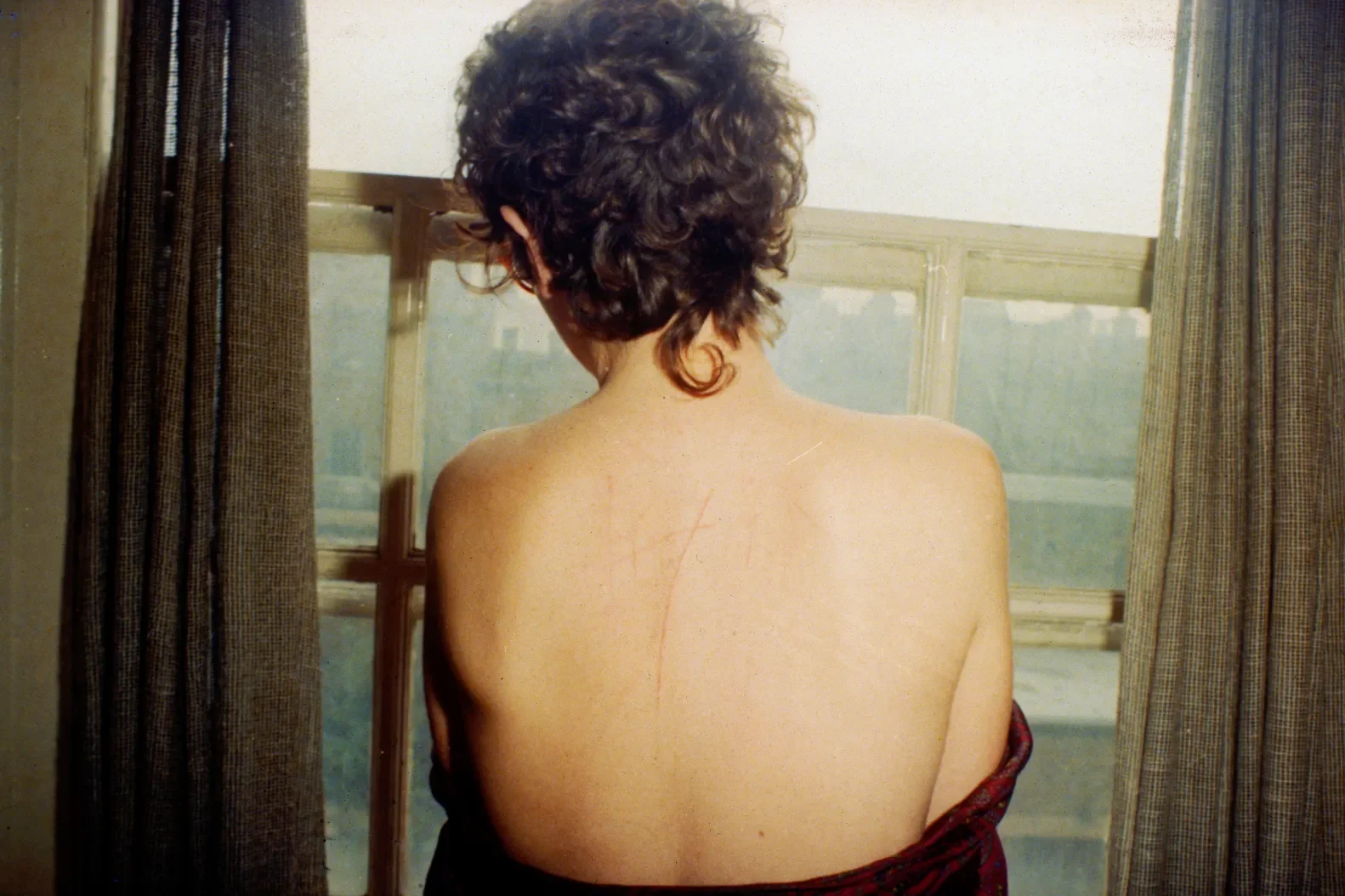
A self-portrait of Nan Goldin.Photograph by Nan Goldin
By Mani Mehrvarz | September 2025
Laura Poitras’ All the Beauty and the Bloodshed is a documentary about photographer Nan Goldin, but it quickly becomes much more than an artist’s biography. It moves between photography, family, sexuality, addiction, the AIDS crisis, New York’s art scene, and Goldin’s later fight against the Sackler family and their role in the opioid crisis.
Goldin’s photographs are at the center of the film. We see her friends, relationships, apartments, parties, bodies, illness, and loss. Many of these photographs have become important records of New York’s downtown culture, but within the film they feel more like pieces of one long personal memory.
Poitras builds much of the story around Goldin’s own voice. She talks about her sister, her family, her relationships, addiction, and the people she photographed. Slowly, the images become connected to the events that shaped the person behind the camera.
Then the film moves toward activism.
After her own experience with OxyContin addiction, Goldin founded P.A.I.N., Prescription Addiction Intervention Now, and began confronting museums and cultural institutions that had accepted money from the Sackler family. This creates an interesting conflict because Goldin is not protesting the art world as an outsider. She is part of it. Her photographs are exhibited in the same institutions she is challenging.
The film also connects her activism to an earlier period of AIDS, queer culture, drugs, and political organizing. Many of Goldin’s friends lived through this period, and many did not survive it. Her photographs were already documenting people whose lives and suffering were often ignored by larger institutions.
This connection between personal history and political action is one of the strongest parts of the film, although it is certainly not a new approach. I kept thinking about Wim Wenders and Juliano Ribeiro Salgado’s The Salt of the Earth. That film also builds a portrait of a photographer through his images, personal history, and the political realities he witnessed. For me, Wenders’ film is more successful in bringing those elements together. The Salt of the Earth was released in 2014 and received an Academy Award nomination for Best Documentary Feature.
There are also moments in All the Beauty and the Bloodshed where I felt Poitras was trying too hard to convince us of something that did not need to be pushed.
At one point, Goldin suspects that she is being followed. The camera seems to accept her suspicion and begins presenting the situation with the tension of a surveillance scene. Whether she was actually being followed is less important to me than how the scene is constructed. Compared with the honesty and intimacy of much of the film, this moment feels strangely staged.
I think this makes the film weaker rather than stronger. Goldin’s photographs, her experience with addiction, the people she lost, and her campaign against the Sacklers already carry enormous weight. There is no need to manufacture additional tension around them.
Still, All the Beauty and the Bloodshed is a fascinating example of how documentary can move between an individual life and a much larger history. Poitras uses Goldin’s photographs not simply as illustrations of the past, but as the structure through which that past is remembered.
Goldin photographed the people around her for decades. She documented love, sex, friendship, addiction, illness, and death. Years later, she used her position within the art world to confront some of the institutions that had celebrated her work.
That relationship between the artist, the institutions around her, and the people represented in her photographs is where the film becomes most interesting to me.
