
How the Arriflex 35BL Changed the Way Films Could Move
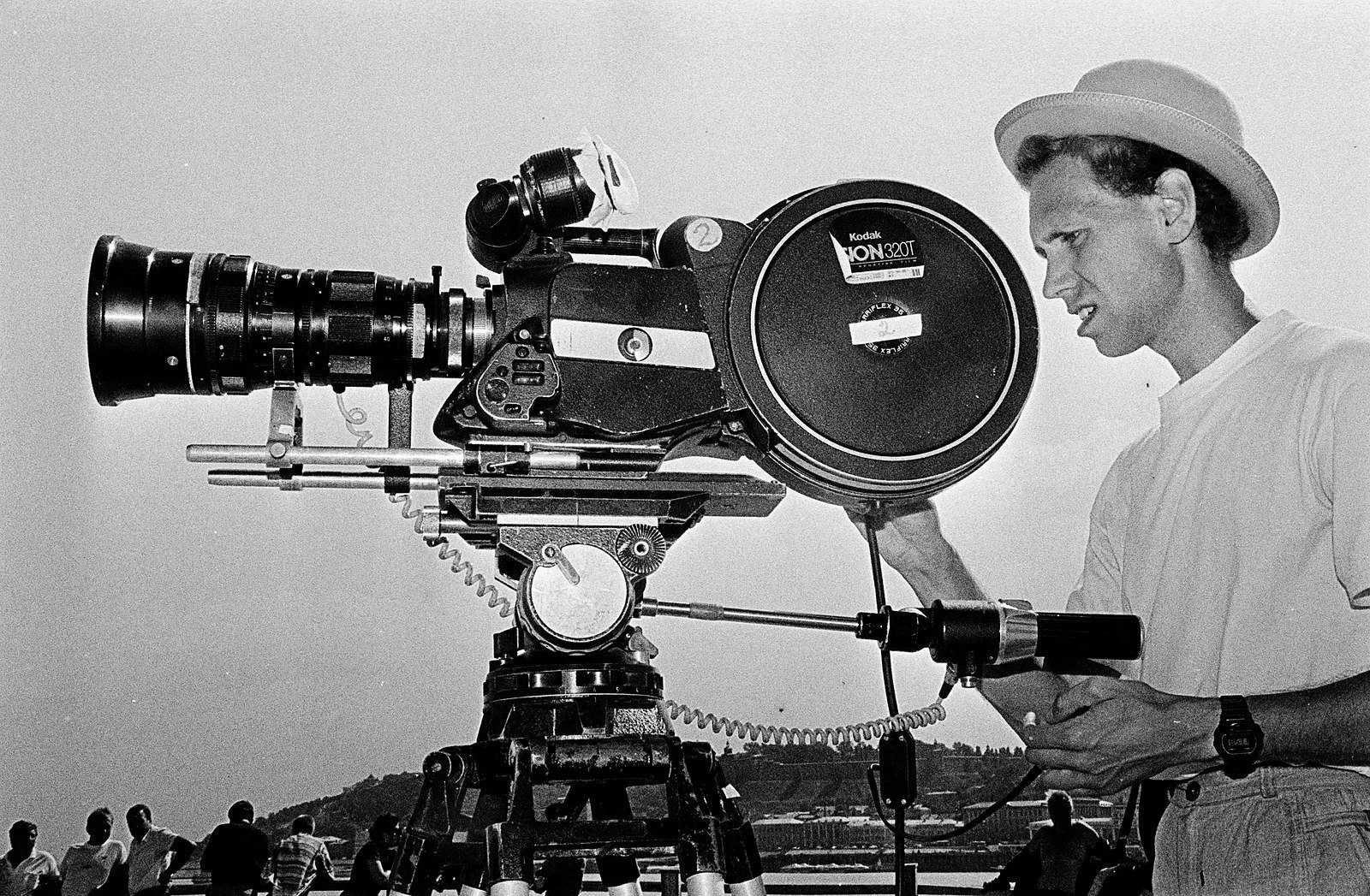
By Click & Frame Team | Feb 2026
Some cameras become important because of their image quality. Others change filmmaking because they make something possible that was difficult before.
The Arriflex 35BL belongs to the second group.
When ARRI introduced the camera in the early 1970s, shooting synchronized sound on 35mm film was still complicated. Film cameras were noisy, and productions often had to place them inside large soundproof blimps. This worked, but it also made the camera heavier and harder to move.
The 35BL was different. It was compact, reflex-based and quiet enough for sync sound. Filmmakers could suddenly move a 35mm camera more freely while recording dialogue.
It sounds like a technical improvement, but it had a visible effect on cinema.
One of the first feature films to use the camera was Across 110th Street in 1972. Shot around Harlem, the film has a roughness and immediacy that fits its environment. Cinematographer Jack Priestley could take the camera into real streets and work handheld without separating the actors from the world around them.
A few years later, Stanley Kubrick used the same camera for a completely different kind of film.
Barry Lyndon is usually remembered for its candlelit interiors and the extremely fast Zeiss lenses Kubrick used to photograph them. But those scenes also required a camera quiet enough to record actors performing in those spaces. The Arriflex 35BL became part of that process.
Then came Taxi Driver.
Martin Scorsese and cinematographer Michael Chapman used the camera while photographing New York at night. Much of the power of Taxi Driver comes from how physically close the camera feels to the streets, cars, sidewalks and people surrounding Travis Bickle. The city does not look like a background. It feels like something the camera is moving through.
Kubrick returned to the 35BL on The Shining, this time combining it with another technology that was still relatively new: Garrett Brown's Steadicam.
The combination helped create some of the film's most recognizable shots. When Danny rides his tricycle through the corridors of the Overlook Hotel, the camera seems to float just behind him. Today that kind of movement feels familiar. At the time, it represented a very different way of moving a camera through a space.
Werner Herzog took the 35BL somewhere else entirely.
For Fitzcarraldo, the camera went into the Amazon, where the production dealt with heat, humidity, difficult terrain and the famous attempt to physically pull a steamship over a hill. It is almost strange to think that the same camera used for Kubrick's controlled interiors could also survive a Herzog production in the jungle.
By the early 1980s, the 35BL was also being used on productions as large as Return of the Jedi.
That range is probably what I find most interesting about the camera. It could photograph Harlem streets, candlelit rooms, New York taxis, a haunted hotel, the Amazon and Star Wars.
And filmmakers continued using versions of the 35BL long after newer cameras became available. Wim Wenders used it on Wings of Desire, Scorsese used it on Goodfellas, and filmmakers such as Aki Kaurismäki continued working with the camera years later.
The Arriflex 35BL is not as famous as many of the directors and films associated with it. Most audiences never knew what camera was being used.
But technology often changes cinema quietly.
The 35BL gave filmmakers something very simple: more freedom to put the camera where they wanted it while still recording sound.
Kubrick, Scorsese, Herzog and others each used that freedom differently.
And the films they made with it still show what happened when a camera became a little quieter, a little smaller and much easier to move.
